Summary
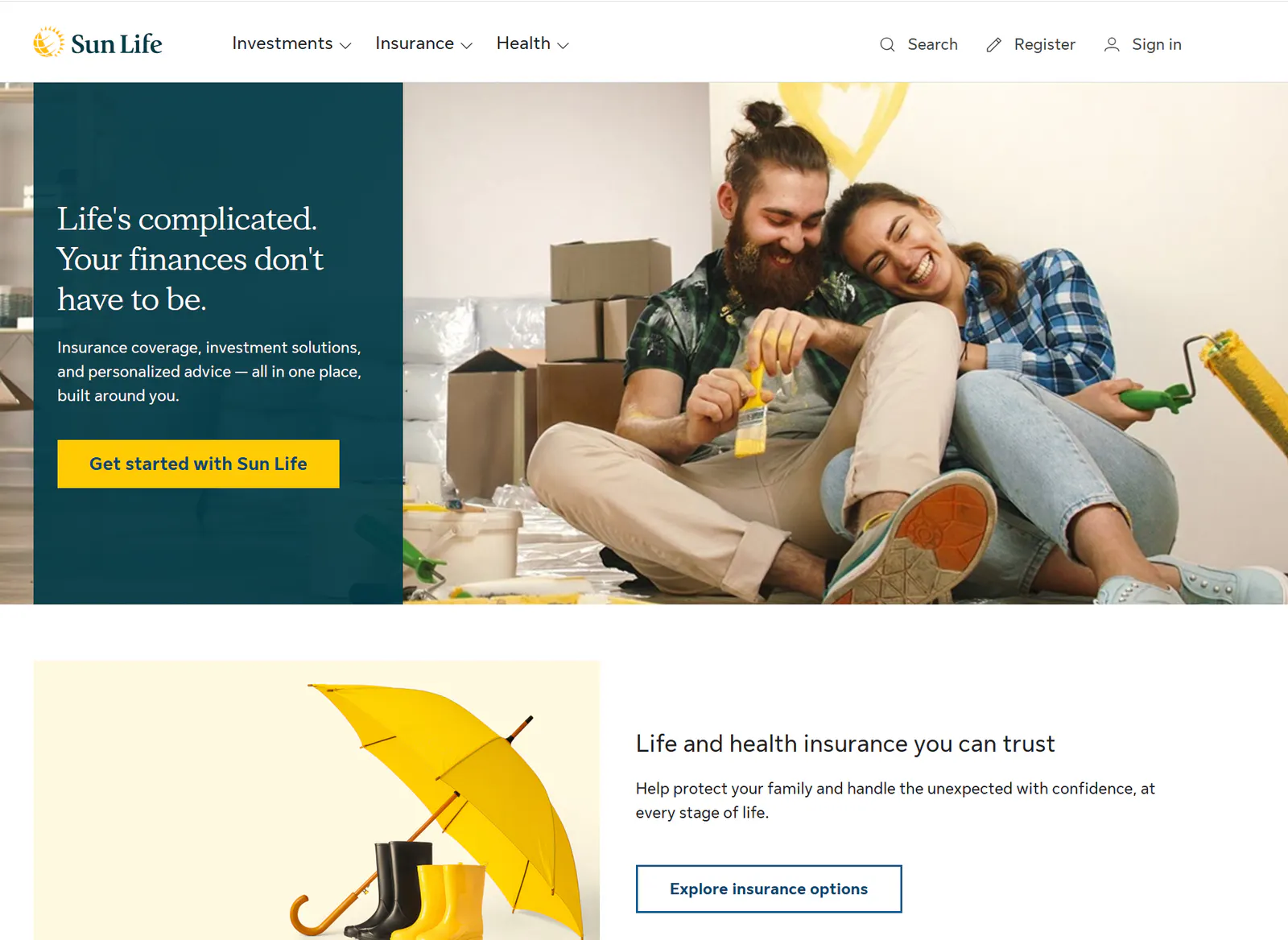
Sun Life’s global digital ecosystem had grown across nine separate design systems, creating inconsistencies for customers and inefficiencies for the teams maintaining its websites.
As a Digital Media Publisher, I contributed to the larger design-system consolidation while leading the redesign of select global microsites alongside a team of three. By auditing existing patterns, applying standardized components, and improving accessibility, our work helped create a more consistent and maintainable digital experience.
Context
Product
Sun Life’s global web ecosystem and supporting microsites
Audience
Customers across multiple markets, plus the publishing, marketing, and development teams maintaining those experiences
My role
Digital Media Publisher working at the intersection of content, UX, and design systems
My scope
Led the redesign of select global microsites with a three-person team while contributing to a broader initiative consolidating nine design systems
Cross-functional partners
UX, Development, Marketing, Business, and Publishing teams
Constraints
Technical debt, regional implementations, legacy content, and accessibility requirements—all while ongoing publishing continued
Problem
Sun Life’s digital experiences had evolved independently across markets. Different teams had created their own patterns and systems, resulting in nine separate design systems being used globally.
Customer experience
For customers, that fragmentation meant interactions and page structures could change depending on which part of Sun Life’s ecosystem they were using.
Internal experience
As someone publishing and updating content daily, I encountered:
- Duplicate and redundant design patterns
- Components behaving differently across sites
- Increased effort to maintain similar experiences
- Accessibility inconsistencies
- Technical debt caused by maintaining multiple implementations
The experience showed me that design-system fragmentation isn’t only a visual-consistency problem—it becomes a usability and operational-efficiency problem as well.
Key insight
Users never see the design system, but they experience every decision made within it.
Working directly with the publishing process helped me see that consistency needed to extend beyond visual design. A successful system had to work for the teams creating, maintaining, and measuring the experience as well.
Standardizing components could therefore solve two problems at once: create a more predictable experience for customers while reducing unnecessary work behind the scenes.
Decision 1 — Standardize before redesigning
Improve each microsite independently
Continue treating regional experiences as separate products.
Introduce new custom patterns
Create one-off solutions wherever an existing experience fell short.
Use shared system patterns
Redesign with the patterns being established through the consolidated design system.
Selection and reasoning
We used the unified design system as the foundation for the microsite redesigns.
Creating additional one-off solutions would have continued the same fragmentation we were trying to remove. Instead, I audited existing pages and patterns, identified redundancies, and worked within the standardized component library wherever possible.
Trade-off
Working inside an established system reduced some visual flexibility, but increased consistency, maintainability, and scalability across markets.
Decision 2 — Treat accessibility as part of the system
Rather than addressing accessibility as a final QA step, we incorporated it into the redesign itself.
I reviewed the microsites against accessibility requirements and worked with the team to improve patterns according to AODA and WCAG standards, including content hierarchy, component usage, and overall usability.
This reinforced another benefit of a shared design system: once an accessible pattern is standardized, multiple experiences can benefit from the improvement instead of each team solving the same problem independently.
Final solution
The redesigned microsites moved away from isolated page treatments toward experiences built from a shared set of reusable patterns and standards.
My contribution included
- Auditing existing microsite patterns and identifying redundant solutions
- Applying standardized design-system components during redesigns
- Improving page structure and accessibility
- Working with Development, Marketing, and Business stakeholders to ensure solutions worked across disciplines
- Documenting patterns and workflows to make future implementation and publishing easier
- Supporting adoption through AEM training and recorded documentation
The result wasn’t simply a cleaner interface. It created a foundation that was easier for customers to understand and easier for internal teams to maintain.
Validation
Success was measured at both the experience and operational level.
Usability metrics
Improved usability across individual sites, supported by stronger accessibility standards and more consistent experiences.
Efficiency savings
Reducing redundant patterns, technical debt, and duplicated workflows contributed to significant operating-cost savings across the wider initiative.
What I took away
A design system isn’t just a library of components. It’s infrastructure for creating a consistent customer experience at scale.
Working on Sun Life’s microsites gave me early exposure to how design decisions affect publishing, development, marketing, and business operations simultaneously.
It shifted how I think about UX: the strongest solutions don’t only make an interface easier to use—they make the organization behind that interface better equipped to deliver it.